Where ChEs Use Domain Expertise in Data Challenges
Every year there are hundreds of data science competitions, but only a handful are related to chemical engineering. Below, you'll find ChE-related contests and challenges -- both open and closed. None of the challenges requires only a solution based on first principles, but a suitable method may integrate principles of physics, chemistry and engineering with data science. And unlike the sources highlighted on this site's page of data sources, here you'll often find rules, hints, deliverables, discussions, solutions, and more.
Image by MonikaP from Pixabay
Competitions for Chemical Processes
Although they're frequent topics in academic literature, process health and prognostics are rarely the focus of data science competitions -- mostly because companies don't want to share data, but partly because of data complexity.

Image by Peter H from Pixabay
Iron Flotation
A process with multiple flotation columns is used to purify iron ore, and teams in this 2019 InClass Kaggle challenge were tasked with estimating product purity.
BackgroundRelated Data

Image from PHM contest documentation
PHM15 - Predict Faults
Competitors focused on fault detection and prognostics in an industrial plant for the 2015 Prognostics and Health Management (PHM) Challenge.
Background & Data
Image by F. Muhammad from Pixabay
Competitions for Unit Ops & Equipment
Multiple competitions focus on individual unit operations or pieces of equipment -- ranging from simple fill tanks to complex machinery like wafer chemical-mechanical planarization systems in the semiconductor industry. Challenges are more common for equipment than entire processes, because the problem is more manageable for competitors and OEMs are willing to share data for test cases. Plus, it's less costly to initiate faults.
Image from SCM contest documentation
SMC19 - Gas Turbines
In 2019, the Smoky Mountains Computational (SMC) Challenge dared competitors to identify potential root causes of pulsation excursions in gas turbine engines.
Background & Data

Image from PHM contest documentation
PHM18 - Ion Mill Etch
The Prognostics and Health Management (PHM) Data Challenge for 2018 tasked competitors with predicting faults for an ion mill etching tool.
Background & Data
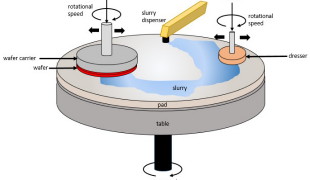
Image from PHM contest documentation
PHM16 - Planarization
For its 2016 competition, the Prognostics and Health Management (PHM) Society focused on a wafer chemical-mechanical planarization (polishing) system.
Background & Data

Image from SACAC contest documentation
SACAC18 - Rain Tank
In 2018, the South African Council for Automation and Control (SACAC) hosted a hackathon based on a simulated domestic rainwater harvesting system.
Backgrnd, Code, Data
Image by M. Jarmoluk from Pixabay
Competitions for Individual Sensors
Although sensors are ubiquitous in the chemical industry and related sectors -- especially because of the Industrial Internet of Things (IIoT) and Industry 4.0 -- competitions rarely focus solely on fault detection and predictive maintenance for individual detectors. The data isn't usually complex enough to be a real challenge, nor is the problem often interesting enough for competitors.

Image from PHM contest documentation
PHM19 - Piezo Sensors
Competitors in the 2109 Prognostics and Health Management (PHM) Challenge used data from piezo sensors to estimate crack length in a metal structure under load.
Background & Data

Image by Erich Westendarp from Pixabay
PHM11 - Anemometer
For the 2011 Prognostics and Health Management (PHM) Challenge, teams focused on anemometer fault prediction for the wind power industry.
Background & Data
Image by Bokskapet from Pixabay
Competitions for Chemical Research
Unlike the sections above, which focus on chemical processes, equipment and sensors, this section and the next one center on molecules and materials, respectively. This section highlights challenges that hone in on the microscopic level, including how molecules move, interact and react.

Image from D3R contest documentation
D3R Grand Challenge
From 2015-2018, inclusive, the Drug Design Data Resource (D3R) hosted a series of four grand challenges focused on predicting ligand-protein binding affinities.
GC4: CatS & BACEGC3: CatS, JAK2 & TIE2
GC2: FXR
GC1: HSP90

Image by Arek Socha from Pixabay
Drug Solubility
Designed by Prof. Jie Zheng and Dr. Zhaoping Xiong, this Kaggle InClass competition uses water solubility data for 1128 compounds.
Background
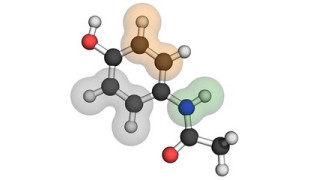
Image from Kaggle contest documentation
Molecular Properties
This $30,000 competition, which closed in Sep '19, challenged competitors to "predict the magnetic interaction between two atoms in a molecule."
Background & Data

Image by Andrew Martin from Pixabay
Classify Compounds
In this Kaggle InClass challenge from Aberystwyth University, competitors use chemical structures to predict levels of blood-brain barrier penetration ('19 & '18) or ability to biodegrade ('17).
'19: Background'18: Background
'17: Background

Image from Merck/Kaggle contest documentation
Drug Activity
Merck sponsored a $40,000 competition in 2012, challenging teams to predict "biological activities of different molecules, both on- and off-target."
Background & Data

Image from Boehringer/Kaggle contest docs
Bio Response
Using normalized data for 1776 molecular descriptors, teams predicted biological activity in this $20,000 competition sponsored by Boehringer in 2012.
Background & Data

Image by Arek Socha from Pixabay
Drug Toxicity
For this 2019 InClass competition, teams were challenged to use Simplified Molecular-Input Line-Entry System (SMILES) expressions and deep neural networks to predict drug toxicity.
Background & Data
Image by D. Simone from Pixabay
Competitions for Material Properties
This section also centers on materials and molecules, focusing on the macroscopic level and related physical & material properties.

Image from MRS contest documentation
MRS Open Data Challenge
Since 2018, the Materials Research Society (MRS) has hosted a data challenge, inspiring student teams to analyze open data sources they create or curate. Runs mid-Dec to mid-Feb.
Current YearTools & Workflow
'19 Winners
Image from SMC contest documentation
SMC Data Challenge
Since 2017, Smoky Mountains Computational Sciences and Engineering Conference has hosted multiple annual data challenges, with Oak Ridge National Laboratory (ORNL) as data sponsors.
'19: Crystallography'18: Sr14Cu24O41
'17: Microscopy
Image from NOMAD contest documentation
Transparent Conductors
In 2018, the Novel Materials Discovery (NOMAD) Centre of Excellence challenged teams to predict formation energy and bandgap energy to "allow for advancements in (opto)electronics."
Background & DataTop 3 Solutions
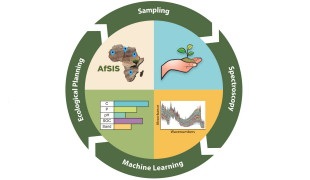
Image from AfSIS/Kaggle contest documentation
Soil Properties Using IR
Africa Soil Information Service (AfSIS) sponsored this $8,000 competition in 2014, challenging teams to "predict 5 target soil functional properties from diffuse reflectance infrared spectroscopy measurements."
Background & Data
Image by dlohner from Pixabay
Entities That Host a Wide Range of Competitions
...some of which are of interest to chemical engineers. This section is not intended to be an exhaustive list of all available data challenges. For instance, critical data challenges related to food security, public health or homelessness won't be included below, but some of the organizations listed might host, sponsor, or promote such competitions in addition to challenges related to chemical engineering. Some challenges listed below may also have been listed in previous sections on this page.
Image from SMC contest documentation
SMC Data Challenge
Since 2017, Smoky Mountains Computational (SMC) Sciences and Engineering Conference has hosted multiple annual data challenges, with ORNL as data sponsors, starting mid-May and ending late July.
Current Challenge'19: 7 Challenges
'18: 6 Challenges
'17: 5 Challenges
Image from PHM contest documentation
PHM Data Challenge
Each year since 2008, the Prognostics and Health Management (PHM) Society host hosted a data challenge, beginning late April and closing late July. All challenges are listed:
'19: PZT Sensor'18: Ion Mill Etch
'17: Train Car
'16: Semiconductor
'15: Power Plant
'14: Risks & Faults
'13: Fault Detect
'11: Anemometer
'10: Milling
'09: Gearbox
'08: Aircraft Engine

Image from KDD contest documentation
KDD Cup
Each year since 1997, the Knowledge Discovery and Data Mining (KDD) Cup has featured a wide variety of problems -- a few, of interest to chemical engineers, are listed below.
Current Challenge'18: Air Quality Index
'08: Breast Cancer
'06: Pulm. Embolisms
'04: Protein Matching
'02: Gene Classes
'01: Genomics
'97-'16: Archive
Image from Kaggle contest documentation
Kaggle Challenges
On behalf of other organizations, Kaggle typical hosts 10+ active challenges -- sometimes with cash prizes ranging from $10 to $1,500,000, while others are just for fun. Closed competitions remain, with data and notebooks available.
All CompetitionsInClass: Chemical
InClass: Drug
InClass: Predictive
InClass: Medical
InClass: Biology

Image from Data Science Bowl documentation
Data Science Bowl
Each year since 2015, Data Science Bowl has partnered with key stakeholders, who provide data, resources and cash prizes for data science solutions to issues like heart disease diagnosis, early cancer detection & child education.
All Challenges

Image from IEEE DataPort
IEEE DataPort
IEEE DataPort community members can post and host time-limited challenges. Relatively new, with few ChE-related problems.
Recent Challenges
Image from Dow contest documentation
Dow Big Data Challenge
From 2013-2017, Dow Chemical challenged students each year with a new opportunity using big data, primarily focused on business operations.
'17: Biz Ops'16: Biz Ops
'15: Inventory
'14: Hopper Cars
'13: Rail Car Fleet

Image from Covestro
Covestro Hackathon
In December 2019, Covestro organized a data-science hackathon focused on "real-world supply chain and production use cases, which ranged from automating consistent product quality testing methods to predicting the remaining percentage of catalyst volume." .
Background